Built for finished goods, materials, packaging, tools, and adjacent services.
Live Product / Marketplace
CheckoutFirst
A makers exchange for scent, skin, and home sellers.
CheckoutFirst started as a focused selling tool. It now supports direct sales, marketplace discovery, destash, digital products, services, and seller tools across multiple maker categories.
Core Facts
Built around how small makers actually sell and trade.
The product supports several seller models instead of forcing one narrow format.
Sellers can bring their own traffic, get discovered, or clear leftover inventory.
The exchange also gives makers useful tools that keep the platform relevant between sales.
Why It Matters
Most commerce products are generic. This one starts with a real category and stays useful.
Small makers often do not need a full store first. They need a fast way to publish what they make, share a link, take payment, and stay in control of the customer relationship.
CheckoutFirst was built for that use case. Sellers get product pages, public seller profiles, marketplace discovery, Stripe payouts, and a front door that now works for several types of maker inventory.
As the product evolved, it added destash support, resource pages, and formula tools that make the product useful beyond checkout alone.
Selected Moves
The product is stronger because the scope is practical.
Direct selling first
Sellers can publish fast, share a product link, and start selling without building a full store.
Marketplace discovery
The browse layer gives sellers a second path to sales beyond their own traffic.
More than one seller type
Finished goods, materials, packaging, tools, digital products, and services can live in one system.
Destash built in
Leftover inventory has a place in the product, which makes the exchange more realistic for makers.
Channel-based model
Direct and discovered sales are treated differently, which gives the business model more logic.
Useful support tools
The resource and formula layer adds value for the same audience without exposing the full process behind it.
Product Surfaces
The interfaces make the broader exchange model easy to understand.
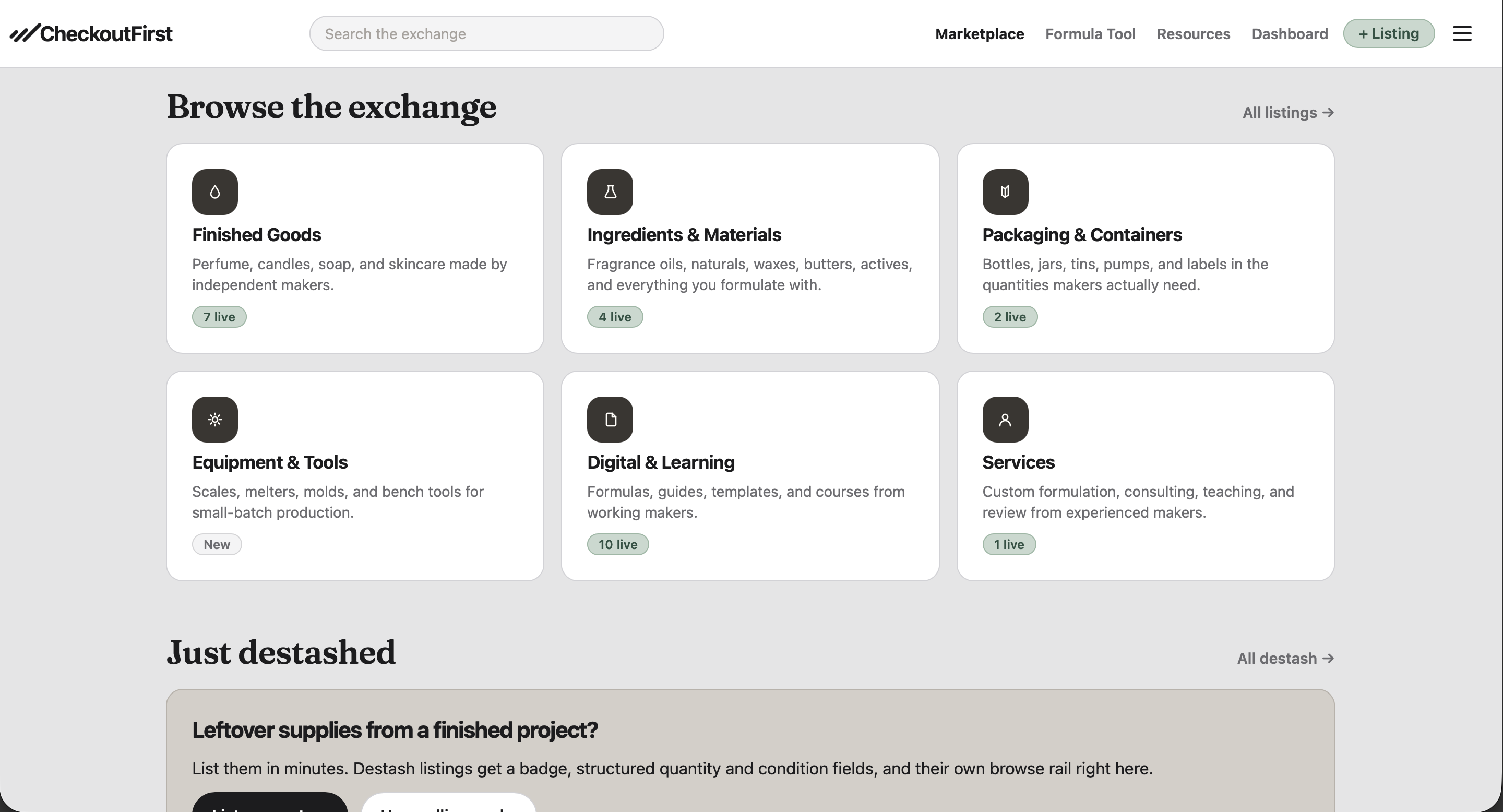
The homepage now speaks to multiple seller types instead of a single narrow use case.
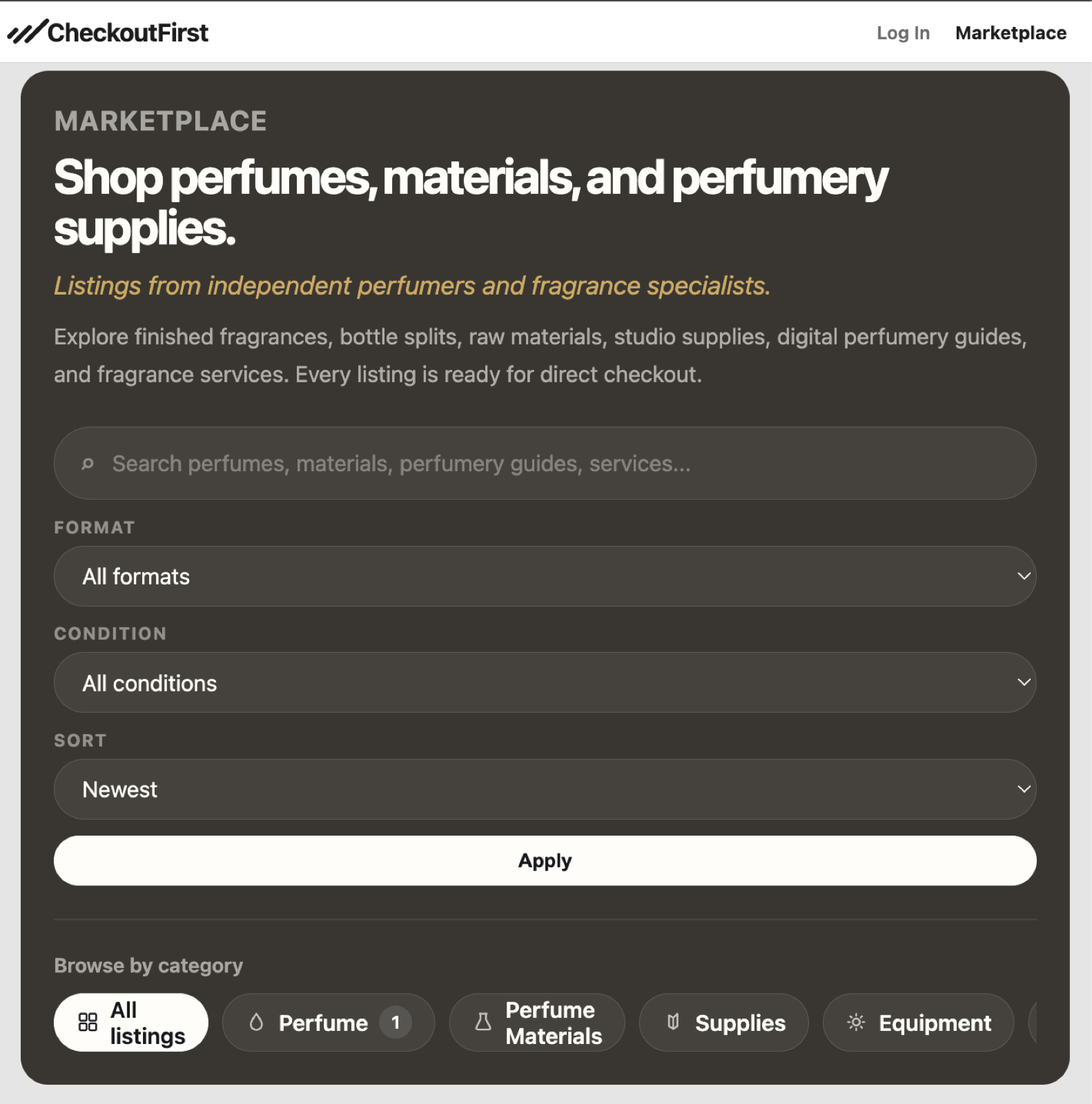
The browse layer supports finished goods, materials, tools, digital products, and services.
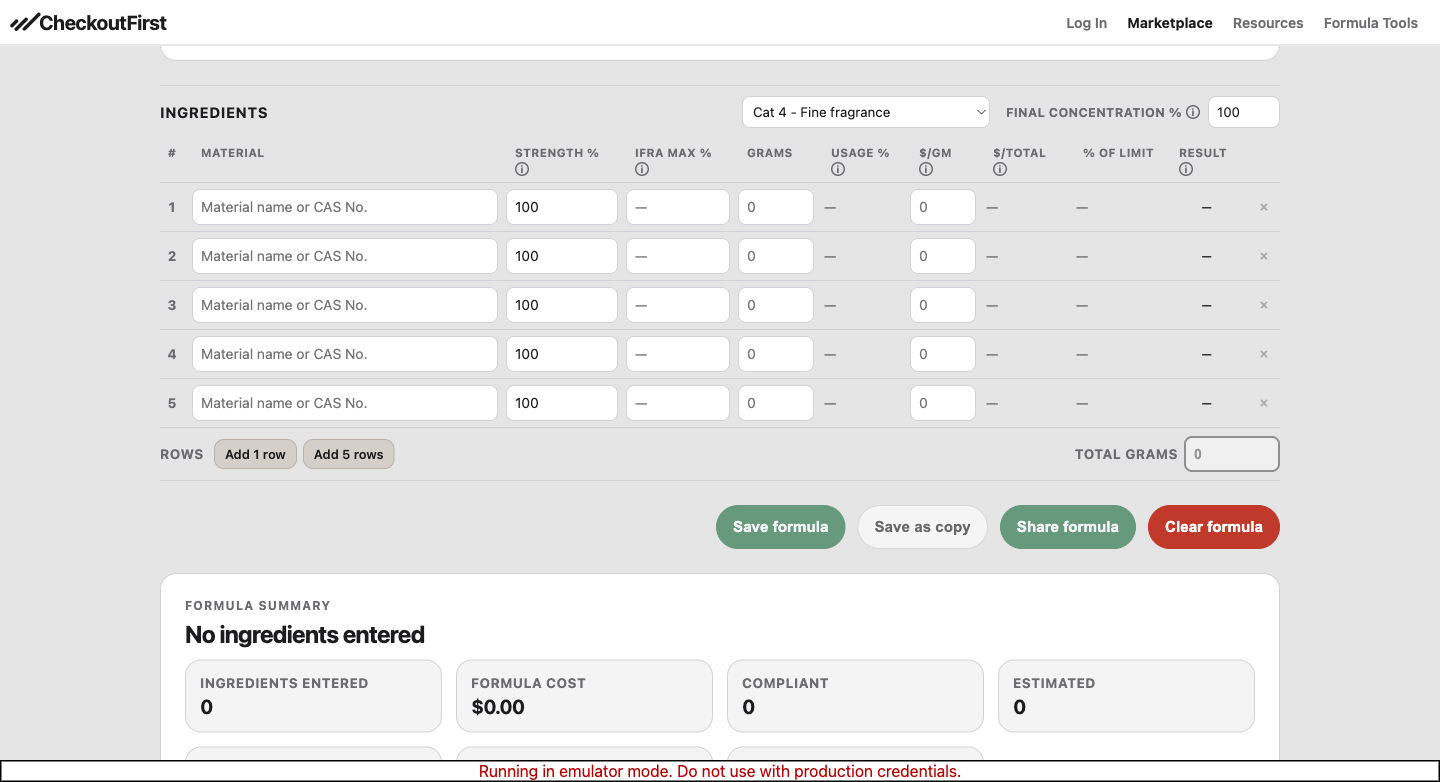
The exchange stays useful between sales because the product also includes practical maker tools.
Current State
The product is already useful, and it still has room to grow.
It is clearly built for small makers instead of trying to serve every kind of seller on the internet.
Seller workflows, marketplace browse, payouts, resources, and tools all support the same audience.
The next step is continued polish and careful expansion around the strongest seller and buyer behaviors.
How It Makes Money
A take rate, not a subscription.
Listing is free and there are no monthly fees. The exchange takes 10% plus 30 cents when a seller brings the buyer themselves, and 15% plus 30 cents when the marketplace is what produced the sale.
The split is the whole business model in one decision. Makers who already have an audience keep more, which gives them a reason to bring it. Makers who do not get distribution they could not build alone, and pay for it only when it works. Nobody pays to be here and fail.